Bob Morrison: 52 Years of Making Music and Doing Ministry

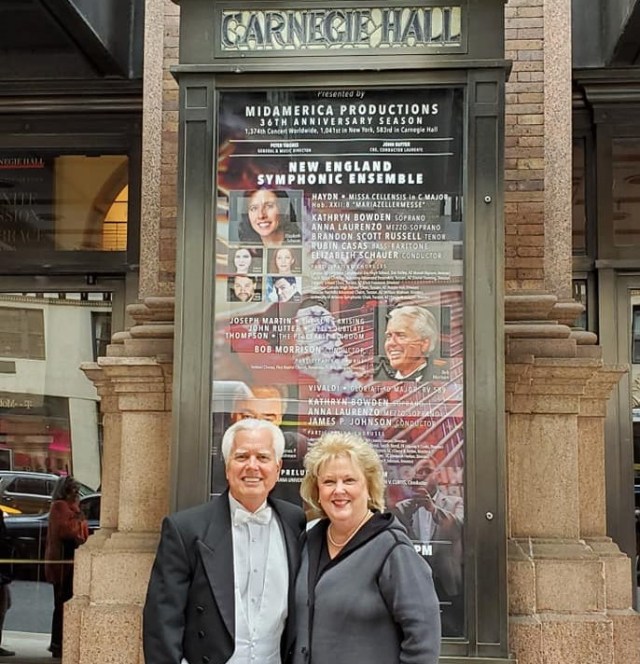
bob and annette at carnegie (2)

After 52 years of serving God through the local church, the final 32 of those at First Baptist Church of Pensacola, Bob Morrison, one of most respected and influential Ministers of Music in Baptist life, is retiring in July 2019.

To put his tenure in perspective, one study indicates that the average pastor tenure is 3.6 years and the average associate pastor tenure is 2.9 years. I suspect that the average Minister of Music tenure is slightly longer but not by much. When compared to almost any benchmark, Morrison’s tenure and effectiveness are remarkable.

Because both Morrison and I are from the same region of Alabama, I was familiar with his name and reputation, but didn’t have the opportunity to meet him until I moved to Florida. Little did I know that in 2005 I would be called to serve as the senior pastor at First Baptist Church of Pensacola and would have the privilege of serving alongside Bob for 12 years. In my 41 years of ministry, Bob would become the Minister of Music I served with for the longest period of time, and likewise, I would become the pastor Bob served with for the longest time frame during the course of his ministry.

Through the years I have been blessed to serve with many great staff members. However, Bob Morrison is one of the hardest working ministers I have ever encountered. In the words of Robert Frost, Bob’s vocation is his avocation.

Nix Daniel, a long-time church member, was chair of the Personnel Committee that recommended Morrison as Minister of Music at First Baptist Pensacola in 1987. Daniel remembers the call process clearly. “While Bob was relatively young, he had many years of experience in smaller churches and had developed a reputation as a very good minister of music with the potential to be a great one. We could look at what Bob had done but I truly felt that God led us to call him. He caused us to see some good reasons but ultimately we trusted what we felt was His guidance.”

As Morrison prepares for retirement, I asked Daniel why Morrison has enjoyed both effectiveness and longevity at First Baptist. Daniel summarized, “My father once told me that you will find people in life who do well because they are extraordinarily talented and others who do well because they have an exceptional work ethic. The people who are truly great at what they do, however, combine those traits. They are extraordinarily talented and have an exceptional work ethic. Bob is extremely talented, has an unparalleled work ethic and a clear calling from God to ministry. That is why he has been a great minister of music for so many years in my opinion.”

After serving alongside Bob Morrison, I can easily affirm that he is a music minister that majors in ministry. Some ministers of music are siloed and are only interested in music. At First Baptist Church of Pensacola, Morrison inherited a great music program and helped to grow it into one of the most outstanding church music programs in the country. But as gifted as Bob is in bringing out the best in choir and orchestra members through music, he excels even more in his care for all in the greater church family.

Morrison’s renowned program at First Baptist is grounded in a graded choir program led by a capable team of volunteers. In addition to his conducting of the Sanctuary Choir and Orchestra, Bob provided hands-on leadership for the Chapel Choir (high school), Surrender (high school auditioned ensemble), and the Singing Seniors (senior adults).

During his 32 years in Pensacola, Bob’s choirs have toured around the country and internationally including multiple trips to sing at St. Mark’s Cathedral (Venice), St. Paul’s Cathedral (London), Notre Dame Cathedral (Paris), St. Michael’s Cathedral (Vienna), St. Giles Cathedral (Edinburgh), First Baptist Church of Rome, and St. Peter’s Basilica (Rome).

In the fall of 2018, Bob received an invitation to be the MidAmerica Productions’ Guest Conductor Series’ “featured musician of the week” at Carnegie Hall. To put this honor in perspective, among the renowned conductors who have led MidAmerica Production concerts are John Rutter, Sherill Milnes, Lukas Foss, and Helmuth Rilling. More than 700 conductors have conducted on MidAmerica’s series in New York, sharing the stage with 1100 solo artists from the world’s greatest opera companies and concert stages, and 3500 choral ensembles from the U.S. and abroad.

Even though the invitation to conduct at Carnegie is extended to the director specifically, Bob would only agree to accept the invitation if he could bring his own choir. Morrison contends that the credit for his invitation belongs to his choir members. “We would not have been noticed at all without the reputation they have generated,” he said.

In April of this year,186 members of the Sanctuary Choir and Orchestra (including alumni and friends) presented a “Carnegie in Pensacola Concert” as a local preview of their upcoming presentation in New York City. On the following weekend, Bob took 160 choir members and friends to historic Carnegie Hall where they presented “The Peaceable Kingdom” by Randall Thompson, an unforgettable experience that served as a pinnacle moment of Bob’s 52 years.

Bob’s demeanor and approach to ministry are appreciated by a diverse group of friends and colleagues. Those of us who served as Bob’s pastor have a firsthand knowledge of Bob’s influence. Bill Shiell, the president at Northern Seminary in Chicago, was elected as Morrison’s first Chapel Choir president when Morrison arrived in Pensacola and later served as Morrison’s music associate. Through the years, Shiell has looked to Morrison as a mentor and confirms that many of the core values that shaped his ministry as a pastor and now an administrator, he learned from Morrison. Shiell reminisces that, “When I served as an interim minister of music, I imitated his style and followed his lead. Even though God’s call didn’t lead me to music ministry, I’m still imitating Bob’s professionalism, vision, and organization. His professionalism and his public and private character have molded me into becoming who I am today.”

Randel Everett, executive director of the Wilberforce Initiative and a former pastor at First Baptist Church of Pensacola, says “Bob and Annette have both made a tremendous Kingdom impact on countless number of lives including mine and our family. It was an honor and privilege to be able to serve with both of them during our time at First Baptist Church. During my tenure I accompanied them on the trip to Sweden and Russia with the choir and orchestra, a trip that is still one of my fondest ministry experiences. I look forward to seeing how God will use Bob and Annette during this next chapter of their lives.”

The current pastor at First Baptist Pensacola, Dave Snyder, has only served alongside Morrison for one year, but he already has profound gratitude for Morrison’s commitment to God and the local church. Snyder says, “Bob Morrison has a genuine love for the church. He maintains a consistent flow of integrity, passion, structure, intentionality, and humility in his work. People around him feel important to the mission of the church through music. Bob is a team player and demonstrates remarkable flexibility in working with his pastor and the staff team.”

Music ministers around the country have been inspired by Bob’s work ethic and his creativity. Billy Orton, Minister of Music at the First Baptist Church in Huntsville, treasures his friendship with Bob Morrison. Orton says, “Blessed with talent, personality, wisdom, and patience, Bob Morrison also possesses that indispensable quality found in truly great people–the willingness to work very hard. Bob has succeeded in myriad ways in the challenging field of church music ministry because of all these significant attributes which God effectively mixed with the love for people so evident in his spirit. Bob’s gifts and heart have touched countless lives. I am grateful for his enduring friendship and support as a colleague in music ministry.”

Across his many years in ministry, Bob has become friends with many well-known composers including Joseph Martin, Heather Sorenson, Pepper Choplin, Mary McDonald, Benjamin Harland, and Bob Burroughs. Harlan says, “Bob Morrison sets the gold standard for music ministry. From the time I first met Bob, I have treasured his friendship, his shared experiences, his ministry insights, his counsel and encouragement, his dedication to excellence, and the warm, compassionate heart that sets apart those who are musicians only, to those who use music to love people in Jesus’ name. It is one of life’s great blessings to have Bob as a friend.”

When I asked Bob Burroughs why composers have such appreciation for Bob Morrison, Burroughs replied, “Bob Morrison is the consummate Church Musician. He has a gentle spirit, a love for his people, a witness for Jesus. Bob Morrison is one of my heroes!” Burroughs composed a musical piece as a tribute to Bob on the occasion of his retirement. Burroughs said, “I wanted my anthem to send him out with joy – hence the title: Go Out With Joy! (Isaiah 55:11-12).”

Most of Bob Morrison’s choirs have included a few exceptional musicians, but most of the members have had little or no music training. However, Bob has a gift for bringing out the best in others. Throughout his ministry he has insisted that when individuals bring their best gifts, especially their voices, as an offering to the Lord, the blending of those voices produce a sound that far exceeds the talent level of any one individual. That is when “choir happens.”

And we can expect that during his retirement years, Morrison will continue to seize every opportunity that comes his way to bring out the best in others and to advance the ministry of the local church, but this time as a faithful participant.

Well done, Bob Morrison! Well done!

You might also want to read “Faithful to God’s Call: An Interview with Bob Morrison” at http://www.barrysnotes.wordpress.com.

(Barry Howard is the retired Senior Pastor of the First Baptist Church of Pensacola. He now serves as a leadership coach, congregational consultant, and columnist with the Center for Healthy Churches.)
Faithful to God’s Call: An Interview with Bob Morrison

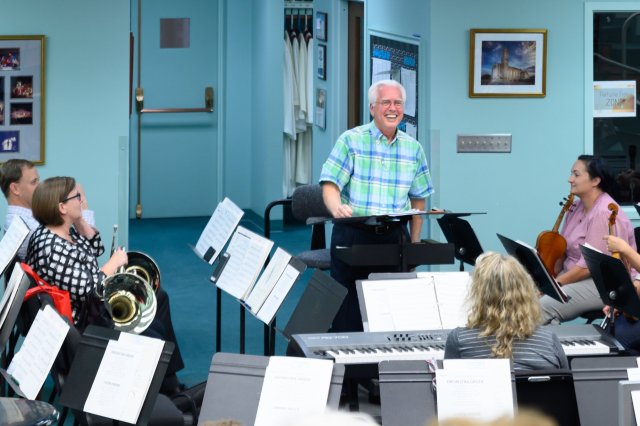
bob m in rehearsal
(photo by Diane Allen)

After 52 years of serving the local church, the final 32 plus as Minister of Music at the First Baptist Church in Pensacola, Bob Morrison is retiring.  Bob, and his wife Annette (who has also served as his administrative assistant) are transitioning to the next chapter, which will likely be a more relaxed season of life involving grandchildren, travel, and continued involvement with their First Baptist Church family.

A couple of weeks ago, I had the privilege of interviewing Bob Morrison regarding his remarkable tenure and his thoughts about retirement. Here is what he had to say:

Barry: Let’s go back to the beginning. How and when did you confirm your Christian faith which has been so foundational to your life and ministry?

Bob: I was 9 years old, and it happened on a Thursday night decision service at Shocco Springs’ RA Camp. For a couple of years, I had been attending this summer week-long camp, and for a few years after my decision I continued to attend until I was too old. The climactic point in the week was always a Thursday night decision service. I remember the night I accepted Christ, I couldn’t wait to call my parents and share the good news with them. I was baptized at FBC, Lineville, Alabama, the next Sunday. 

Barry: When did you sense the call to music ministry?

Bob: I felt called to actual music ministry while I was serving as BSU Choir director at Jacksonville State University in 1970, but I had made the decision to go into music in some fashion as a 2nd grader in Lineville Elementary School in 1958. My music teacher had selected me to “conduct” the little rhythm band for our spring program, which consisted of me pointing to the appropriate rhythm instrument when it was their turn to play…so, yes, pretty much like I do to our church orchestra now! At any rate, that experience captured me forever, and from that day forward I knew I wanted to do music with my life; I never wavered from that decision.

When I entered JSU as a freshman, I was on track to be a band director, having served as drum major for our high school band my junior and senior years. Through the BSU Choir experience, though, I felt God redirecting me to be in church music. Again, a decision I’ve never second guessed…even though I know that being a band director would possibly have put me more on the cutting edge of evangelism.

While I definitely had a God-called experience back in 1970, answering the call has been a dynamic activity for me, wherein I need to recommit to that call periodically. One of my life verses has been Philippians 3:12b: We press on to take hold of that for which Christ Jesus took hold of us. Staying in the ministry throughout my whole life definitely has been predicated on the truth of this exercise…taking hold of that for which you were taken hold.

Barry: You also started in music ministry at a young age, even before finishing college or seminary. What are the some of the advantages and disadvantages of starting ministry at a younger age and working your way through school?

Bob: Always active in my churches’ choir programs wherever my family lived through my growing up years, I was asked to serve as the “minister of music” during Youth Sunday when I was 15 at the First Baptist Church of Saks (Anniston, AL); I loved it! I remember my minister of music at the time trying to convince me it wasn’t necessary to hold extra rehearsals leading up to Youth Sunday, something I guess we disagreed on.

At any rate, a year later when we lost our minister of music, the church asked if I would direct the choir during the interim, which I gladly accepted. During that time, we did a full program for Easter, a John Peterson cantata as I recall. It went well, and the church asked if I would take the position permanently. Though it was only part-time, the experience I gained leading the adult choir, instrumental ensemble, youth choir and children’s choirs at FBC, Saks, for the next four years was invaluable! So…the experience gained at such a young age affected my life’s work in a major way and became the foundation on which everything else would be built.

Another big advantage of starting young would have to be how it helped determine who I married. I was already doing what I would be doing the rest of my life, so any prospective wife would already know what she’d be getting in to. God perfectly put me with someone that was active in our choir at church, and in my band at school. Annette has been a co-laborer from day one, and in my mind, is just as called as I am.

Barry: I recall that you completed your seminary degree at Southwestern Seminary in Fort Worth. Many individuals bypass seminary altogether and go straight on to a church staff. How important is a seminary degree for a Minister of Music, and how have you benefited from your seminary training?

Bob: In my experience, seminary was a natural progression to preparing me to be a church musician. I can’t imagine doing this work without the knowledge I gained at seminary. There were some of my classmates who were only attending seminary because they felt it would afford them a bigger church ultimately, and who weren’t really buying in to what was being taught.

I was just the opposite. I hung on every word. There simply was not a subject I took that I didn’t grow from and enjoy, but some of my favorites were Music in Missions & Hymnology by T.W. Hunt, Choral Diction by Jack Coldiron, Practice of Church Music by Joe King, Philosophy of Church Music by Cecil Roper, and Conducting Techniques by Robert Burton. A couple of my non-music classes that I totally loved were Evangelism by Roy Fish, and Baptist History by John Baker.  Seminary showed me the BIG PICTURE and served to provide impetus throughout my ministry. 

Barry: I think you could have been an excellent professor, clinician, or composer. Those who know you are tremendously grateful that you chose to serve in the local church. What are some of the things you have enjoyed most about serving in context of the local church?

Bob: One of my favorite things about being a music minister in the local church is that I get to work with all ages, including children through senior adults. Fortunately, I’ve always had a healthy take on the aging process, and from the very start, some of my closest friends were senior adults. So, yes, this multi-generational landscape within the local church’s music ministry has been a highlight!

The local church music ministry has also been a wonderful place for me because of how diversified my interests are. That is to say, my interests are multi-faceted…music (obviously), choral, orchestral, traveling with music groups, sound systems, video systems, technology, etc. Where else could a person work and be able to delve into all these areas, and more! Whether it’s rehearsing a group to make beautiful music for worship experiences, touring with groups, soldering connections in your sound system, registering the colors in a camera, building cases for speakers to tour with, or…well, almost anything! Working in the local church has allowed me to do it all, and I’m so grateful.

Barry: Although your primary area of service has been Music and Worship, your responsibilities have covered other areas including pastoral care, technology, media, and others. How does serving in areas outside your major area inform and enhance your overall ministry and effectiveness?

Bob: I somewhat addressed this topic in the previous question, but just to add…doing those non-music parts of my job allows me to network and develop relationships with folks whom I may not get to know otherwise. It also helps me easily adopt the big picture of church work and keeps me from being totally tunnel-visioned (which could easily happen). Conversely, it allows the church folk to see me in a pastoral role, helping them to realize that I’m minister first, musician second.

Barry: You have worked with multiple choirs and music groups (Sanctuary Choir, Orchestra, Chapel Choir, Singing Seniors, etc). Do you have a favorite age group or music group?

Bob: You know, I don’t. I guess the best way to say it is, my “favorite group” is the one I happen to be working with at the time. It’s always been a goal of mine for the group I’m currently working with to think – based on how I’m acting toward them – that they must be my favorite…’cause they are (at the time)!

Barry: You have taken many choirs on tours around the U.S and around the globe? Is there one trip that stands out in your mind as groundbreaking, monumental, or most memorable? And do you have a favorite tour location?

Bob: Touring has indeed been one of the trademarks of our music ministries at every church. There are so many benefits and advantages that happen naturally because of touring; things like working hard together to prepare the music, living together for a couple of weeks which allows for deeper relationships, etc. And then the obvious: the opportunity to share the Good News of Christ with our listeners in some amazing places, and the sheer excitement of experiencing God’s creation and His people in far-away places. I simply cannot imagine doing music ministry without the tour experience!

As to a favorite tour, it’s impossible for me to say. They’ve all been my favorite on their year!

Barry: What is your favorite hymn or anthem, and why?

Bob: I have many of each, but I’d have to say “Great Is Thy Faithfulness” is one of my all-time favorite hymns, speaking of God’s constant care for us and interest in us. Also near the top for hymns would be “Here I Am, Lord,” a hymn that speaks to our total surrender to God in service.

As to an anthem, I often kiddingly remark to the choir that such and such song is my “new” favorite anthem…and that pretty much is right, for God keeps gifting composers to write new and wonderful choral and orchestral arrangements, providing for me a moving scale. So…my “new” favorite anthem for now is “More Than Conquerors,” relating how nothing can separate us from the love of Christ, and with His presence in our lives, we can overcome anything this world may challenge us with.

Barry: As someone who has served in the same church for 32 years, what do you see as the primary factors that contributed to your longevity?

Bob: What a great question! And how difficult it will be to adequately answer it. I’ve kiddingly responded to folks, as they’ve made comments regarding the accomplishment of being in the same church this long, “It’s not that hard, actually; you simply have to be someone no other church wants.”

Assuming one serves a church whose people can abide longevity from their staff member, though – which I definitely do – the greatest challenge of staying somewhere this long is simply to keep your own interest up…staying in the game for the long haul. Achieving that in my own case was made easier because our great church resources their music ministry extremely well, and the singing and playing participants themselves are willing to invest their own monies to be involved in some pretty exciting projects.

That means, in addition to leading regular Sunday worship times, we get to do some amazing activities. Things like bringing in big name Christian artists like Joseph Martin, Ken Medema, Steve Green, etc., to do a combined program with our choir and orchestra; like taking the adult choir and orchestra, and our older youth choir, on international tours every two years (each group goes once every four years, offset from one another by two years); like touring each summer with our older youth choir throughout the USA and Canada; like budgeting adequate dollars to support our annual DEO (Christmas) production; like investing in needed props to do the PENSACOLA EASTER PAGEANT; like purchasing instruments to be used in our orchestra program; and on and on I could go.

Knowing I’ve served a church like that gives you a bit of insight into the kind of people at FBCP. They’re the best folks anywhere and they stand ready to do just about anything you can put before them! If they even know about the word “can’t,” I’m not aware of it. It’s unnatural to “want to leave” folks like that! Even now as we’re on the cusp of retiring, I still can’t get excited about leaving this position.

I know it’s time, though, and once past the actual day of retiring, God will infuse me with excitement about what lies ahead. Things like time to spend with my grandkids, my parents, for traveling, and for making new and different kinds of contributions to Kingdom work.

And on a final note: To the person currently serving on a church staff, I would say stay as long as you can under God’s leadership. There are both advantages and benefits that you get to experience – and yes, that the church gets to experience – that simply are not available to short termers. I’m certainly glad I did!

Barry: What advice would you give to a young adult starting out on their journey in music ministry?

Bob: Go back, go back! (Just kidding.) I would encourage them in that, if they are definite in their sense of call to music ministry, then go for it. In my mind, there is nothing that will satisfy you more, or give you a greater sense of purpose and fulfillment, than doing church music. Second, I would advise them to place huge importance on choosing their life’s mate, for nothing can replace the synergy that will exist between you and a wife who also senses a call to music ministry. It’s a win-win (for your marriage and for the church you serve).

I would also encourage them to seek appropriate training. If I were advising a would-be minister of music today, I would encourage them to look seriously at some of our colleges with church music degrees, both on the undergraduate and graduate levels. Recent changes in some of our seminaries give me pause to confidently recommend them to a prospective church worship pastor, though I’m open to being proven wrong, for I’m still very indebted to my seminary experience at SWBTS.

Barry: As you prepare for the next chapter, what are some of the things you plan to do in retirement?

Bob: Top of my list, spend more time with my grandkids! Annette and I are fortunate in that we live in the same city as our grandchildren and oldest son and his wife. We even go to the same church! Same can be said about my parents; both my mom and dad attend FBCP, and I definitely plan to be more present in their daily lives. Our youngest son and his new wife live in Boston, where he is a Teaching Fellow at Harvard University in music; visiting them in their new place will be exciting! So…family takes on top priority!

I also want to further develop a little side interest of mine – which also benefited our choirs for the past 6 years here at FBCP – ChoirPrompt. You can find out more than you’d ever want to know about this at http://www.choirprompt.com.

Getting back to playing my horn is also a goal of mine. While directing groups is wonderful, by its very nature it prevents you from participating as an instrumentalist or singer. It will be fun to personally “make music” again, and not just be “directing music-makers.”

And finally, even though we’ve travelled extensively on our choir tours through the years, I think Annette and I will enjoy some travel. We both love to explore new places and things, and there’s a whole lot of the world we’ve never been to, so occasional travel will surely be in the picture. It’ll be different traveling without 100 of our closest friends and doing concerts, but I’m thinking it’ll be fun, nonetheless.

One of my greatest desires is to continue to be faithful to God’s calling on my life, even in retirement. I don’t know what that looks like, exactly, at this point, but that’s what I want to be. For my entire life I’ve encouraged folks to be responsive to God’s call to serve through music, and to be faithful in that service. Now that I’m here at my working life’s conclusion, may I prove just as faithful as those in my charge for all these years.

Thank you, Bob Morrison, for being faith to God’s call and for sharing your gift with so many for so long. We will miss your leadership, but your friendship and influence will continue to shape us and advance the kingdom for years to come.

(Barry Howard is the retired Senior Pastor at First Baptist Church of Pensacola. He currently serves as a leadership coach, congregational consultant, and columnist for the Center for Healthy Churches.)

Encouraging Those Who Are Called

EncourageWordle

While editing the recently published book, Call Stories, I had the privilege of reading dozens of unique testimonies of women and men God had called to pastoral ministry.

These stories prompted me to revisit my own call experience at the early age of 16. I am grateful and indebted to my church family and my pastor for the support, affirmation, and encouragement they provided for me. During those early days, as I navigated that divine nudge toward ministry, I was surrounded by an army of the faithful who helped me flesh out my calling.

I didn’t fully appreciate that early support until I encountered other young ministers who did not have the generous support system that had launched me into a positive direction in ministry.

Throughout my years as a pastor, I have tried to lead individuals in my congregations to offer that same kind of enthusiastic support to those who sensed God’s call to vocational ministry from within our church family.

While I believe that every follower of Jesus is called to serve with their best gifts, whatever their vocation, I also understand that the call to vocational ministry is more than a career choice. It is a mysterious summons to a unique lifestyle that requires devotion, transparency, and self-sacrifice.

What are some practical and healthy things churches can do to provide support and encouragement to those who hear and respond to God’s call to serve in vocational ministry?

1. Pray for them. I don’t say this tritely or mean this hyper-spiritually. What a blessing it was for me to have individuals from my home church continue to assure me of their prayers! Pray for a clear sense of direction, for their decisions regarding education and training, and for doors to open for them to serve.

2. Offer words of affirmation and support. After announcing a “call to ministry,” individuals who experience such a call may be overwhelmed with anxiety and perplexed with questions. Some even wrestle with self-doubt. A note of encouragement or a few spoken words of affirmation certainly can help boost a newly called minister in the right direction.

3. Create available opportunities for them to serve and “try on” their call to ministry. My pastor invited me to preach my first sermon two weeks following my call experience. Then, with the endorsement of my church family, he recommended me as a counselor at a Christian camp for the summer. Maybe your church can offer specific ministry assignments or an internship for those who are exploring ministry, or a residency program for those who are preparing for their first call. There is no substitute for “on the field” experience in ministry.

4. Provide scholarship assistance and encourage their education and training. This may mean providing support for those who follow a traditional route to ministerial training by completing a bachelor’s degree followed by a residential experience at a seminary or divinity school. Or, as more and more churches call staff members who are “in process” with their education, this may mean making a way for a minister to serve in the local church while completing his or her theological training in some combination of a virtual classroom, a seminary extension center, and a residential campus experience.

5. Give them a few tools for ministry. Shortly after I announced my call to ministry, individuals in my home congregation showered me with books. One couple gave me a Strong’s Concordance, one family gave me a Bible Atlas, and another individual gave me an extremely dated book entitled The Young Minister. Nowadays, it might be helpful to give a minister an Amazon gift card where they can purchase books in hard print or digital format. A Bible software package or theological journal subscription is another helpful resource. If your church provides a group software subscription for your staff, consider providing the login to your ministerial students.

6. Celebrate progressive steps on their ministerial journey. Not long after I announced my call to ministry, my church hosted a service celebrating my call to ministry by presenting to me a “Certificate of License and Affirmation” and a new Thompson Chain Reference Bible (one of the most popular and expensive editions in 1977). Later, when I was called to be pastor, my first church held a service of ordination. And all the churches I served celebrated and affirmed the completion of each stage of my theological training. Every celebration marked a progressive step in my ministerial journey.

7. Network with them throughout their ministry. This could include endorsing the ministers by recommending them to places of service, communicating with the ministers throughout their careers, and inviting them back home periodically to preach or teach. Not every experience in ministry is pleasant and not every venture bears obvious fruit. Sometimes conflict arises within congregations or ministers make costly mistakes. A proactive and redemptive “home church” may be called on to assist and support a minister called from within their church family if that minister happens to have a bad call experience. I know of home churches that have provided such ministers a temporary place to recover, refresh, and retool in order to prepare for their next chapter in ministry.

One of the reasons I was fairly well prepared and equipped to enter pastoral ministry is because I was surrounded by a community of encouragement both in my home church and beyond. One of the characteristics of a healthy church is that they nurture a culture of call, and then they support and encourage those who hear and respond to the call.

(Barry Howard serves as a Clergy Coach and Congregational Consultant with the Center for Healthy Churches. He currently resides in Pensacola, Florida. His writings also appear on his blog, Barrys Notes, and you can follow him on Twitter @BarrysNotes.)

A Good Way to Celebrate Religious Liberty: Exercise Your Freedom to Worship


Religious-freedom

Fire up the grill. Crank up the ice cream churn. Prepare for the fireworks show. Hum along to a little John Phillips Sousa.  It’s Fourth of July week!

Independence Day is a time to give thanks for our unrivaled freedom, and a great time to reflect on and celebrate our religious liberty. Religious liberty refers to the right to worship freely without fear of persecution. Yet religious liberty also protects citizens from compulsory religious participation. In other words, our government is to neither compel nor dissuade our participation in worship.

Noting the catastrophes that had occurred historically when the government becomes the guardian of the church, our nation’s founders strategically planned their new government with a wall of separation between church and state. When tempted to tear down that wall we should not forget the words of Isaac Backus, a noted Baptist minister who served during the era of the American revolution: “When Church and State are separate, the effects are happy, and they do not at all interfere with each other; but where they have been confounded together, no tongue nor pen can fully describe the mischiefs that have ensued.”

While many of us plan to celebrate our nation’s independence with picnics, barbeques, and ballgames, I hope we will also seize the opportunity to celebrate religious freedom by exercising our freedom to worship. Since religious liberty is a core distinctive among Baptists and a core motive in our country’s founding, gathering with a faith community to participate in worship is a particularly appropriate way to celebrate.

Our Baptists ancestors were among the many who contended for religious liberty for all faiths. The First Amendment to the Constitution of the United States confirms that Congress shall make no law respecting an establishment of religion, or prohibiting the free exercise thereof; or abridging the freedom of speech, or of the press; or the right of the people peaceably to assemble, and to petition the Government for a redress of grievances.

As citizens of these United States, we enjoy more comprehensive freedom than any other nation on earth, but let us never forget that with great freedom comes great responsibility.

In light of our religious liberty, let us pray fervently for those who live in regions of the world that are subject to harsh religious persecution. As we freely choose where and when to worship, let us remember our brothers and sisters who will gather anxiously but faithfully in underground churches, taking risks unfamiliar to most of us, in order to worship God and gather with their fellow believers.

In my years of experience as a pastor, I have noted that joining regularly with other believers to worship nurtures spiritual growth, fosters moral character and encourages humanitarian service. Hebrews 10:25 reminds us, “Some people have gotten out of the habit of meeting for worship, but we must not do that. We should keep on encouraging each other, especially since you know that the day of the Lord’s coming is getting closer” (CEV).

To neglect the opportunity to gather for worship and Bible study is to trivialize the tremendous price paid for our freedom to assemble without fear of reprisal or repercussion. Perhaps the most detrimental symptom of historical amnesia is the tendency to take freedom for granted.

You and I can best celebrate and preserve our liberty by exercising the privileges that accompany our extraordinary freedom. This month is a prime opportunity to celebrate. Whether you spend the time at home or on the road, make plans for a fun and festive day with family and friends celebrating our nation’s independence. Take time to give thanks for our great heritage and to pray for our nation’s leaders.

Most importantly, celebrate religious liberty by exercising your freedom to worship. And respect the freedom of others to choose when, how or if they worship. For if one group among us loses their religious freedom, religious liberty will be in jeopardy for us all.

(Barry Howard serves as leadership coach and congregational consultant with the Center for Healthy Churches.  He and his wife Amanda live in Pensacola, Florida.

Practicing Healthy Self-Care: An Essential Discipline for a Pastor

self care photo

Recent studies indicate that stress, burnout, and mental fatigue are becoming more intensive among clergy, leading even come of the most devout ministers to leave ministry. And while no one knows the exact percentage of ministers who experience depression, one Baylor University professor to suggest, “The likelihood is that one out of every four ministers is depressed.”

It is tremendously tough for those who care for the souls of others to take care of themselves. But proactive self-care is absolutely essential for ministers who hope to serve effectively and with longevity. Self-care includes developing and maintaining healthy practices that promote and preserve good physical, spiritual and mental well-being.

While these three areas of wellness are intertwined and inseparable, in my own life and the experience of many of my colleagues, I recognize that more attention has been given to physical and spiritual health, and mental health is often neglected, often resulting in the diminishment of all three.

Mental health includes our emotional, psychological, and social well-being. Every human being experiences highs and lows in mental health. Although some forms of mental illness are serious and require the ongoing care of a therapist, general variations in mental health may be related to circumstances or body chemistry, and may be preemptively avoided or proactively addressed by practicing good mental hygiene.

A common but naïve misconception is that pastors or persons with strong religious faith are exempt from mental distress. The Apostle Paul is noted for his courageous ministry but even he confessed, “Besides everything else, I face daily the pressure of my concern for all the churches” (II Corinthians 11:28 NIV).

In his book, Surviving the Stained-Glass Jungle, veteran pastor Dr. Bill Self contended that, “Self-care is not destructive self-indulgence, but rather it is being a steward of some rather special gifts— the human body and soul, along with the capacity to bring joy to others as well as to experience it.”

Those in every vocation experience varying levels of stress, distress, and duress. However, because the pastoral task requires remarkable investment in the lives of others, a pastor who neglects mental hygiene can gradually slip into a state of melancholy or emotional chaos, and then compound the dilemma by ignoring the symptoms for fear of stigmatizing his or her ministry.

As a coach and encourage pastors I can identify at least five areas that commonly place stress on a pastor’s mental and emotional health:

Unrealistic expectations- These expectations can be real or perceived, and they can be generated by vocal congregants or be self-imposed by a minister with a “messiah complex.” Most congregations have ambivalent expectations that fluctuate between market-driven goals (e.g., attendance, budgets, awards) and mission-driven goals (e.g., participation, stewardship, life transformation). The wider the gap between these two categories, the more intense the stress on the minister.
Perpetual preparation– The task of perpetual preparation can be a mentally exhausting chore. Many professional public speakers have 4-5 well-rehearsed speeches that they give over and over to different groups. Professors and teachers have lectures and lesson plans that are updated and revised from semester to semester but they usually follow a core curriculum. A preaching pastor is unique in that he or she is generally expected to prepare and deliver 40-50 different Sunday sermons per year to virtually the same group of people, in addition to providing devotionals, Bible studies, and speeches for community events.
Diverse emotional encounters– A minister deals with grief, grace, and everything in between on a daily basis. Perhaps more than any other vocation, a pastor regularly moves in and out of situations with polarizing and intense emotions such as birth and death, marriage and divorce, perversion and conversion, and conflict and resolution. If a pastor is not careful, the residual emotions from these encounters will linger and intermingle creating either emotional apathy or spiritual neuropathy.
Dealing with problem people– Not to be confused with people with problems, problem people are unusually high maintenance individuals who consume an exorbitant amount of a pastor’s time with an unnecessary complaint or unconstructive criticism. Marshall Shelley refers to these “well-intentioned dragons” as “sincere, well-meaning saints, but they leave ulcers, strained relationships, and hard feelings in their wake.”
The weight of confidentiality– Because the pastoral role is not only prophetic but also priestly, a pastor is entrusted with a lot of confidential information that is locked away into a pastor’s mental storage. The volume of this information can become a heavy emotional weight if it remains in a pastor’s mental inbox and is not appropriately archived.

In light of these and other areas of pastoral stress, to preserve good health and promote longevity in ministry, how can a pastor practice good mental and emotional hygiene?
Each pastor has to identify and adopt hygienic habits that fit his or her context and personality. Here are some practices I am finding to be helpful in my own pastoral routine:

• Establish and maintain a consistent prayer and devotional life.
• Maintain friendship with a trustworthy conversation partner, perhaps even another pastor, outside of your church.
• Convene a small accountability group, establish a confidentiality covenant with them, and meet with them monthly.
• Read regularly in multiple genres including biography, history, and fiction.
• Pay attention to diet, especially limiting intake of sugar, caffeine, and other foods that can trigger emotional swings.
• Develop a regimen of moderate physical exercise.
• Follow a consistent routine for sleep and rest.
• Periodically disconnect from the work of the church, especially from mental labor (problem solving, conflict management), cellphone calls, and social media.
• Have an annual physical examination, as well as eye examination and dermatology screening.
• Participate in a peer network of pastors who convene with a covenant of confidentiality, and who vent and vision together.

Be alert to seasons when your mental distress leads to dysfunction, manifested by ongoing and overwhelming symptoms of depression, chronic anxiety, paranoia, and/or insomnia. Immediately enlist the care of a medical professional. To procrastinate getting care prolongs the process of recovery.

Life in the stained-glass jungle has unique rewards and challenges. Self-care is absolutely essential. Before departing this world Bill Self reminded us that, “It takes courage to take care of yourself. One of the hallmarks of a professional is the ability to keep healthy— physically, emotionally, and spiritually. You must take responsibility for yourself and not expect others to take the initiative to care for you.”

Practicing healthy self-care can empower a pastor to be mentally sharp, emotionally balanced, and spiritually perceptive in all seasons.

(Barry Howard is the retired senior pastor of the First Baptist Church in Pensacola, Florida. He currently serves as a coach, consultant, and columnist with the Center for Healthy Churches. He enjoys golf, reading, and gardening.)

Navigating Diversity: A Growing, Yet Crucial Challenge for Churches and Pastors

rose window at notre dame

One pastor wondered out loud, “How in the world can my church of 240 members have over 500 different opinions?” Another pastor complained, “These days ministry is more about herding cats than shepherding sheep.”

One of the most enriching and fatiguing things about church life these days is the enormous diversity of thought and opinions within most local congregations.

During my last five or so years of full-time service as a pastor, I often scratched my head and wondered why I felt more fatigued than I did during my early years of ministry. There were likely many contributing factors including my age, my length of tenure, and what Paul called “the daily pressure of my concern for the churches” (II Corinthians 11:28). But it dawned on me that a part of this new mental fatigue that most pastors experience is produced by the continual task of navigating diversity within the church, a challenge for which most pastors are neither trained nor prepared.

To further process my notion, I started listing the ways the church is more diverse today than it was when I began my first tenure as a pastor. I quickly identified 10 areas of church ministry that illustrate this proliferation of diversity:

1. Generational diversity: There are now 4-6 generations present on any given Sunday in many multi-generational churches.

2. Translation diversity: Rather than one standard Bible translation, members of my congregation read a variety of different Bible translations in hard print and on their smart devices, and I am sure there are a dozen or more different translations being referenced each time I preach.

3. Racial and ethnic diversity: There are a growing number of races, ethnicities, and cultural backgrounds present within most healthy congregations.

4. Worship time diversity: Many churches have multiple worship services on Sunday, throughout the weekend, or during the week. Such a congregation seldom, if ever, meets together, creating an environment where many members never meet each other.

5. Worship style diversity: Our church hosts three Sunday morning worship services, two in English and one in Vietnamese, and each involves a different style of worship. Without proactive pastoral leadership and cohesive missional unity, stylistic differences can breed conflict and competition within a church family.

6. Curriculum diversity: Rather than a standard denominational literature, there are multiple curricula used by Sunday School and Bible study groups in our church. And small groups often choose their own material, which may or may not correlate with the mission and doctrine of that particular local church.

7. Missional partnership diversity: Rather than having a singular missional partnership, many of our churches contribute to and network with multiple mission partners. The last time I counted, our church partnered with or contributed to 48 different entities or agencies through designated and undesignated giving.

8. Denominational background diversity: Years ago, it was a rare occurrence for a person to join our church from a different denomination, but today there are persons from various denominational traditions represented in our congregation. Almost half of the new members of the Baptist church I served came from non-Baptist background.

9. Political diversity: In my first church, I would venture to say that the congregation was pretty evenly divided between the two primary political parties, but they never brought their political differences to church. Today congregants may be affiliated with political parties, subsidiary groups within each party, PACS, and lobbying groups, and many readily articulate their political biases at church, often claiming that their perspective is the only “true Christian perspective.”

10. Theological diversity: Multiple strands of theological influence, from both academic and folk theology, are represented in the DNA of most local congregations. And church members read from a unique mix of pop authors and scholars.

Unfortunately, there was no course offered in seminary on “Navigating Diversity.” Churches basically are going to do one of two things in regard to diversity. They will either limit diversity, by becoming a highly homogenized church. For example, they will focus on ministry to one or two generations, “only” allow one Bible translation, or only promote one theological perspective. Or they will embrace their diversity and leverage it for kingdom purposes.

Does this expanded diversity have a positive or negative affect on the congregation? I think it depends on how ministers and ministry leaders circumnavigate the diversity.

From a potentially negative perspective, there are many ways diversity makes ministry more challenging:
1) Communication becomes more challenging because the words that seem to be healthy and benign to one group of people can serve as emotional triggers to others.
2) Planning a program of discipleship, ministry initiatives, or activities for a diverse congregation can become cumbersome.
3) Navigating the tension created by extraordinary diversity can weary the staff.
4) The greater the diversity, the greater the potential for conflict.

But from a positive perspective, a high level of diversity provides many kingdom opportunities and benefits:
1) Those in a diverse congregation can learn to respect varying points of view.
2) Multiple generations, ethnicities, and spiritual backgrounds tend to provide multiple perspectives that enrich the overall ministry of the church.
3) If a diverse congregation is diligent “to preserve the unity of the Spirit in the bonds of peace” (Ephesians 4:3), that congregation can be a powerful witness to the transformative power of the gospel.
4) A diverse congregation usually is comprised of diverse spiritual gifts, talents, and skill sets.
5) A highly diverse congregation is a vivid picture of the diversity of God’s universal family. Like the colors and images in a church’s stained glass windows, diversity becomes a prism through which the light of Christ paints a portrait of the love of God.

Local churches are more diverse today than at any point in history. And indications are that diversity will continue to increase exponentially. To effectively navigate diversity, it is imperative for any church, especially a highly diverse congregation, to share a common commitment to following Jesus, to look to the Bible as their spiritual compass, and to covenant to engage in worship and ministry in a sphere of mutual respect.

Ministers and church leaders are discovering that negotiating and arbitrating diversity in a “big tent church” is highly demanding and a task that can never be put on cruise control. Navigating diversity requires non-partisan pastoral guidance and a high bandwidth of grace within a local congregation.

I believe that when a church embraces their diversity and learns to navigate it wisely that church may discover that, like a wellspring, their diversity gushes with untapped kingdom potential.

((Barry Howard is the retired senior pastor of the First Baptist Church in Pensacola, Florida. He currently serves as a coach, consultant, and columnist with the Center for Healthy Churches. He enjoys golf, reading, and gardening.)

Cover to Cover: 12 Benefits from Reading through the Bible


Read Through the Bible

My high school youth group was encouraged not only to have a “quiet time” each day, but also to “read the Bible through.” I remember how intimidating this challenge was for a group of teenagers. Back then, for me to read one chapter of Leviticus or Deuteronomy was like taking a sedative. Nonetheless, I accepted the challenge.

Now, all these years later, I have made it a regular practice to read, or listen, through a variety of translations of the Bible.

One of the blessings of growing up Baptist is that I was taught to love and appreciate the Bible as a uniquely inspired volume, “a treasure of divine instruction.” (Baptist Faith and Message 1963, Article I).

There are multiple ways to approach the Bible, and not all of them are good. It is possible to weaponize the Bible, using it to attack others by stringing together “cut and paste” verses to bombard those who do not live according to its teachings. Some politicize the Bible, using it to endorse their candidate, to affirm their party platform, or to legitimize their agenda. And some are content to romanticize the scriptures, reducing it to slogans and platitudes, and speaking of it affectionately without allowing this two-edged scalpel to biopsy their own soul.

Healthy churches encourage their members to read and study the Bible regularly, immersing their lives in its teachings, allowing it to inform and transform their worldview. Healthy churches hold a high view of scripture, proposing that the Bible defies antiquity and speaks with fresh relevance into the issues of our day. Healthy churches teach and preach a curriculum anchored in the whole body of scripture, and not a redacted canon of favorite verses.

One good way for a church to help its members deepen their faith and develop a theological foundation is to promote the discipline of reading through the entire Bible.

There are many benefits of reading the Bible through. Here are twelve that have enriched my life and faith:

1. Helps us understand the Bible in context. We are better equipped to interpret whole passages, rather than merely citing our favorite verses in a way that disconnects them from their original stories.

2. Heightens our awareness of the major themes of the Bible. Salvation, grace, redemption, suffering, perseverance, and hope are just a few examples of the refrains we encounter from Genesis to the Revelation.

3. Highlights the diversity within God’s family. The various characters in the drama of scripture illustrate that an assorted human cast comprises a vast spiritual family.

4. Introduces us to various genres of literature. In the Bible we encounter prose and poetry, history and prophecy, parable and proverb, commandment and beatitude. And each typology serves as a vehicle of communication offering specific clues on the interpretation and application of a given text.

5. Equips us with interpretation skills. As we grow more familiar with the text, we are better able to discern between the descriptive passages and prescriptive teachings. By becoming better acquainted with the ancient community of faith we may readily extrapolate the implications and applications for our own emerging culture.

6. Invites us to wrestle with difficult texts. Serious students of the Bible must contend with seeming incongruities and perplexing paradoxes. It is either naïve or dishonest to pretend such challenging passages do not exist. Scripture is durable. Don’t be afraid to grapple with the tough texts.

7. Deepens our appreciation for those human instruments who gave us the Bible. In reading the whole canon, we grow in gratitude for the writers, editors, scribes, and scholars who penned, edited, and preserved the biblical texts across the ages.

8. Expands our worship repertoire. As we encounter the rich variety of liturgies, prayers, and instrumentation included in scripture, we more naturally value psalms, hymns, and spiritual songs as our native tongue for worship.

9. Builds a reservoir of wisdom and knowledge. As we “hide the word in our heart,” we are collecting a repertoire of spiritual wisdom to help us navigate all the seasons of life.

10. Opens our minds to new ideas. We are inspired toward relevant and contextual applications of scripture for our day. And we are much more likely to welcome the Spirit to work in new ways among us, and much less likely to approach church life with a “back to Egypt” mentality.

11. Deconstructs our preferences and prejudices. We are called to move beyond our own assumptions and presuppositions, and to realign our lives with newly discovered truth and insight.

12. Encourages us to be lifetime students of the Bible. Reading the Bible through enhances my appetite a deeper investigation, compelling me to continually probe its content and reflect on it claims.

There are many read-the-Bible-through plans available online. Even if you are not a faithful reader, you can become an avid listener. Most Bible apps have audible options which allow us to listen to the Bible through.

If you want to be a more devoted follower of Jesus and a more knowledgeable student of the Bible, embark on the journey of reading through the Bible in its entirety. And don’t skip the difficult sections. You may unearth a cache of spiritual treasure there.

(Barry Howard is the retired senior pastor of the First Baptist Church in Pensacola, Florida. He currently serves as a coach, consultant, and columnist with the Center for Healthy Churches. He enjoys golf, reading, and gardening.)


Dr. James Pleitz: A Pastor’s Best Friend

Eight years ago this week we said goodbye to our beloved pastor emeritus, Dr. Pleitz. He was an excellent pastor and an exemplary pastor emeritus.  Here is the blog I wrote shortly after his departure:

barrysnotes's avatarCove Creek Reflections

barry and dr. pleitz

Dr. James Pleitz departed for his eternal home on Sunday evening. He was ready to go and looking forward to the trip. Dr. Pleitz told me that over and over again. I told our congregation last Sunday morning that Dr. Pleitz was “sitting on the launching pad awaiting liftoff.” The launch sequence reached zero shortly before 8 o’clock.

While we have no doubt about his destination, he will be missed. In addition to serving as a legendary pastor at both First Baptist Church of Pensacola and Park Cities Baptist Church in Dallas, Dr. Pleitz spent his final years as our Pastor Emeritus. He fulfilled the responsibilities of that role more effectively than any emeritus pastor I know.

“Pastor Emeritus” is an honorary title given by a congregation to honor their founding or long-time pastor. It means, “We know you are retired, but we still look to you as a senior…

View original post 340 more words

A Fresh Wind Is Blowing: It’s Time to Raise Our Sails

sailboat on the bay

Yesterday, as I was reflecting on Pentecost, I drove across the Tennessee River and happened to catch a glance of a marina with yachts, fishing boats, speedboats, and few sailboats.  And near the marina, I glimpsed a picturesque scene of a few sailboats gliding across the backwater as they were powered by a gentle breeze.

As I reflected on the work of the Holy Spirit, I was reminded of the words of my friend, Reggie McNeal, author of Missional Renaissance: “The Spirit is a work in the world, and it’s the job of the church to get on the same page as the Spirit, not the job of the Spirit to get on the same page as the church.”

As we navigate the chaos of a changing world, including fluctuating church metrics and shifting cultural norms, a fresh wind of the Spirit is blowing.

My first notions of the spirit world did not come from the Bible but emerged from a book about Thirteen Alabama Ghosts and Jeffrey, a southern folklore written by Kathryn Tucker Windham and Margaret Gillis Figh.  Among this collection of stories, there is the tale of Jeffrey, a mischievous spirit who first made his presence known in the Windham home in October 1966. Jeffrey was alleged, “At irregular and infrequent intervals, to clump down the hall, slam doors, rock in a chair, frighten the family cat, move heavy pieces of furniture, cause electronic equipment to malfunction, and hide objects.”

When I was in Mrs. Gibson’s fourth grade class, I chose this book for my first ever “book report.”  This book highlighted thirteen of the best ghost stories from small town Alabama. To this day, when I drive through the square of one of those quaint Alabama communities I look to see if there is a face in the courthouse window.

As a child growing up in the Bible Belt, I associated the ghost in the courthouse with the Holy Ghost in the church house. Evangelists who visited our community preached passionate and lengthy revival sermons alternating almost schizophrenically between asking, “Have you received the Holy Ghost?”, and warning us to, “Beware of quenching the Holy Ghost,” as though this supernatural apparition could invade our bodies or condemn our soul, depending on your extemporaneous emotional response to the sermon.

Growing up in the Baptist church, I learned more about the Holy Spirit from our confessional statement, the Baptist Faith and Message (1963): The Holy Spirit is the Spirit of God. He inspired holy men of old to write the Scriptures. Through illumination He enables men to understand truth. He exalts Christ. He convicts of sin, of righteousness and of judgment. He calls men to the Saviour, and effects regeneration. He cultivates Christian character, comforts believers, and bestows the spiritual gifts by which they serve God through His church. He seals the believer unto the day of final redemption. His presence in the Christian is the assurance of God to bring the believer into the fulness of the stature of Christ. He enlightens and empowers the believer and the church in worship, evangelism, and service.

As I continue to study the Bible and reflect on the Spirit, I think I have grown a little in my thinking and in my understanding of pneumatology. I appreciate my somewhat Bapti-costal childhood, but when it comes to my early impressions of the spiritual things, let’s just say that I still have a lot of unpacking to do. Even the name “Holy Spirit,” which occurs in most English translations except the King James Version, is much more friendly than “Holy Ghost,” the former connoting holiness and the latter evoking more of a sense of spiritual haunting.

When I move beyond the religious folklore and as I deal with my own early ghostly notions of the third person of the trinity, the biblical narrative helps bring much needed clarity to my understanding of the Holy Spirit.  Prior to the unfolding of what we now call “Holy Week,” Jesus began to prepare his disciples for his own departure by acknowledging that he would be going away, and yet he assured them, “I will not leave you as orphans. I will come to you” (John 14:18).  Although the incarnate Jesus had been with them in bodily form, now Jesus was explaining that after the time of his physical departure, his Spirit would come to be present with them in a most fascinating and yet mysterious sort of way. “And I will ask the Father, and he will give you another advocate to help you and be with you forever—the Spirit of truth” (John 14:16-17).

As I revisit the account in John’s gospel of Jesus foretelling of the comforter and encourager yet to arrive, I am consoled that Jesus’ closest followers didn’t “get it” either in the beginning.  I resonate with the anxiety and the perplexity of the disciples when Jesus started talking about a terminal point in his ministry, an unspecified incident yet to come which would alter and transform their relationship.  They must have sensed by Jesus’ veiled hints that some crucial experience was looming in the not-too-distant future, but they could not have imagined the significance of these proceedings. They could not have anticipated the brutality of his eventual execution, and obviously, they were astonished and surprised by his unexpected resurrection.

Prior to his death, Jesus had been their mentor. They even called him, “Rabbi.”  He had shown them a new way to live, a life not based on status or perfection, but a self- worth founded on God’s love and a value system grounded in God’s grace.  Jesus accepted them in their imperfect human condition without prerequisite, and nurtured within them a lifestyle trending toward simplicity and service.

When he spoke of his pending departure, they must have wondered, who will lead us now?  Will we return to “business as usual”?  Who will teach us about God’s ways and expectations?

That to me seems to be the role of the Holy Spirit.  This advocate about whom Jesus spoke is now assigned to Christ followers to navigate our steps, to keep us affirmed by God’s love, to steer us toward a lifestyle of service and simplicity, and to protect us from legalism by keeping us grounded in grace.  Paul so believed in this spiritual linkage, he wrote to the Romans that “The Spirit himself testifies with our spirit that we are God’s children.” (8:16)

Although my early impressions of the Spirit were more ghost-like, I now embrace the Holy Spirit as the spirit or personality or presence of God at work in the world today .  And this Spirit is not floating around obliviously in the cosmos but takes up residence within a temple of human flesh.  The Spirit of God that hovered over the waters in the creation story now occupies a human habitat in the redemption story.

And the Spirit is not a “show-off” with the demeanor of an exhibitionist showcasing bizarre feats. Rather, the Spirit prefers to work clandestinely, deflecting attention while always prompting people toward God and the Jesus-kind-of- life.

The Pentecost event is an integral part of biblical history. And now, we observe Pentecost to celebrate the coming of the Spirit, the birthday of the church, and the globalization of the Christian faith. However, just as we cannot duplicate the resurrection or re-enact the ascension, we cannot recreate the phenomena of Pentecost.  Our God is not the god of repeat performances but is a God who is always seeking to do a new thing. The Spirit is filled with creativity and innovation and persistence.  And just maybe, the Spirit is initiating an original story within you.

In his book, Thinking About God, Fisher Humphreys, describes the Spirit as One who “brings life and vitality into the experience of the Christian and the church. He vivifies us. He makes Christian living dynamic as well as decent.”  I understand the activity of the Spirit to be a work of fostering unity, not division; a work of inspiring creativity, not repressing it; and a work of re-visioning the future, not preserving the status quo.

In Acts 2, Luke describes the advent of the Spirit as “a mighty rushing wind.”  I live on the Gulf Coast where the breeze is continual, but the speed is variable. The Spirit resembles the wind, a force that cannot be conjured or micromanaged. The wind blows and though we cannot dictate its direction or mediate its velocity, we can choose to raise our sails.

(Barry Howard is the retired senior pastor of the First Baptist Church in Pensacola, Florida.  He currently serves as a coach, consultant, and columnist with the Center for Healthy Churches.  He enjoys golf, reading, and gardening.)


Why We Should Encourage Our Pastor to Take an Extra Day Off This Week


church staff.jpg

To bless our ministers and promote their health and well-being, we should encourage our pastor and ministerial staff to take at least one extra day off this week.

Ministry is a unique vocation wherein most pastors are “on call” 24/7. I loved serving as a pastor, but the personal investment of time, thought, and energy required to do ministry well is off the charts, even on normal weeks.

When you factor in a holiday week like Easter that involves additional worship services and requires extra preparation, a pastor’s mental and physical capacity can become depleted quickly, no matter how deeply spiritual they are.

How can a minister maintain a vibrant and energized ministry? In addition to nurturing their own walk of faith, effective ministers must intentionally set aside time for rest and revitalization.

As ministers, there are times we get caught up in the joy and enthusiasm of high and holy days like Easter and Christmas, and the rush of adrenaline can lead us to the false assumption that we are exempt from the need for sabbath rejuvenation.

Rest, recuperation, and rejuvenation are crucial to every sport and every vocation, and ministry is no exception.

You never see a starting pitcher in Major League Baseball pitch in consecutive games, save for the most extreme circumstances in a playoff game. They need to rest their arms.

Your favorite college football team never plays more than one game in a week. They need to mend and heal.

A truck driver is limited by law to driving no more than 8 hours without a 30-minute break, and no more than 11 hours per day, followed by a 10-hour mandatory rest.

Who wants a pilot flying their plan without adequate rest? Who wants a pilot flying their plane without adequate rest? Who wants a surgeon to perform surgery without first having a good night’s sleep? Who wants a pastor who is depleted and fatigued attending to the matters of their soul?  Who wants a pastor who is depleted and fatigued attending to the matters of their soul?

Several years ago at a conference in Gadsden, Alabama, the popular preacher and author Vance Havner challenged each of the participating pastors to prioritize rest. He reminded us that, “The pastor who is always available isn’t worth much when he is available.” It’s true for both men and women who serve in a ministerial role.

Back in the 1980’s, I was in a group of young pastors who had the privilege of spending a couple of hours with Charles Stanley, longtime pastor of First Baptist Church in Atlanta, Georgia, in a hotel lobby after a church growth conference.

As Stanley fielded our questions, one young pastor asked, “Dr. Stanley, what is the best advice you can give a young pastor?” I expected that Dr. Stanley would comment on the importance of “preparing yourself before you preach to others,” or making good eye contact during the sermon or that he would encourage us to “lead like Moses.” Therefore, I was surprised when he replied, “Always remember, sometimes the most spiritual thing you can do is rest.” Through the years, I’ve never forgotten his advice.

Rest is imperative for ministers, especially after a busy season like Easter. Pastors need rest for their voices, minds, bodies and spirits.

Just as a lack of rest can contribute to underperformance, mood changes, depression, burnout, and a general decline in health, so recuperative sleep and rejuvenating rest have many positive benefits that enrich a pastor’s ministry:

Refreshes the mind, body and spirit.
Enriches our relationships.
Restores our joy.
Sharpens our memory.
Makes us more pleasant to be around.
Improves our overall health.
Stimulates creativity and innovation.
Promotes a healthy life-work balance.
Maximizes our capacity to serve effectively.
Enhances our love for doing ministry.

A cumulative overview of the ministerial responsibilities this past week would look something like this:

• Leading Holy Week services on consecutive days.
• Countless hours in the study writing devotionals and preparing sermons.
• Multiple planning sessions to make sure that parking, security and hospitality concerns are covered.
• Nights of mulling over messages as you try to sleep.
• Making hospital visits on Good Friday.
• Doing an unexpected funeral on Silent Saturday.
• Proofreading the bulletin for the third time.
• Attending the children’s annual Easter egg hunt.
• Pouring yourself into the preaching of one, two, three or more services on Easter weekend.

Perhaps the most spiritual thing your ministers can do is rest.

One of our responsibilities as church members is to encourage, or better yet to insist, that our ministers take time to rest. And that may mean giving them our blessing to take an extra day off this week.

(Barry Howard is the retired senior pastor of the First Baptist Church in Pensacola, Florida. He currently serves as a coach, consultant, and columnist with the Center for Healthy Churches. He enjoys golf, reading, and gardening.)