
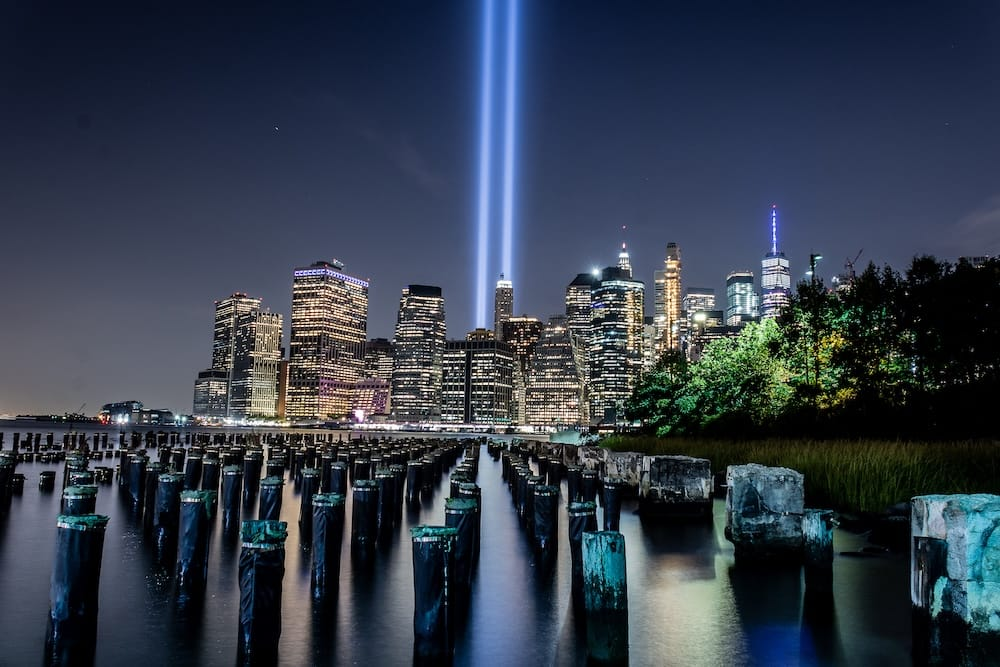
Twenty-five years ago this week, our nation experienced one of the darkest days in American history.
On September 11, 2001, nearly 3,000 people lost their lives in a series of terrorist attacks that changed our nation and, in many ways, changed the world. For those of us who remember that day, the memories remain remarkably vivid. We remember where we were. We remember what we were doing. We remember the images that seemed almost impossible to comprehend.
I remember exactly where I was. I was visiting the home of a church member, helping her family plan the memorial service for her husband, who had died the previous evening. As we were finalizing the date and time for the service, a family member interrupted us and asked me to step into the kitchen. There, she pointed to the television and began to cry as she said, “I thought you needed to know what is happening in New York.”
I watched the replay of the first plane striking the World Trade Center. I returned to the living room, where we prayed for the grieving family and for our nation. At that moment, we had no idea that more tragedy was yet to come.
After our prayer, I quickly returned to the church campus, where I found our staff gathered around a television. As I entered the room, the second tower was struck.
Like millions of Americans, we watched, prayed, cried, and tried to comprehend what was happening.
But as I look back 25 years later, I remember something else. When the worst happened, many people gave their best.
Tragedy certainly brought out some of the worst in humanity. Terrorists demonstrated the destructive power of hatred and fanaticism. Fear, suspicion, anger, and division followed.
But that is not the whole story. The larger story is about ordinary people doing extraordinary things.
First responders ran toward danger while everyone else was running away. Firefighters, police officers, paramedics, military personnel, medical professionals, airline crews, and countless volunteers put themselves at risk to help strangers.
Neighbors helped neighbors. Strangers comforted strangers. People stood in line to donate blood. Churches, synagogues, mosques, and other houses of worship opened their doors. People gathered to pray, to grieve, and to encourage each other.
For a brief moment, many of the things that normally divided us seemed insignificant compared with the things that united us.
We were Americans before we were Republicans or Democrats. We were neighbors before we were strangers. We were human beings before we were members of different races, religions, political parties, or socioeconomic groups. We discovered that compassion can be contagious.
Fred Rogers offered a simple lesson that seems particularly appropriate when remembering September 11. He recalled that when he was a boy and saw frightening things in the news, his mother would tell him, “Look for the helpers. You will always find people who are helping.” The Fred Rogers Institute continues to identify this as an important part of his legacy for helping people navigate difficult times.
On September 11, there were helpers everywhere. Some wore uniforms. Some carried medical supplies. Some opened their doors to complete strangers, Some donated blood. Some offered a meal, a ride, a place to stay, or a listening ear. Some simply stood beside someone who was frightened or grieving.
Most of them probably never thought of themselves as acting heroically. They were responding to the needs in front of them. And perhaps that is what makes them unsuspecting heroes.
We don’t always know what we are capable of until circumstances call upon us to respond. Sometimes courage is not something we plan; it is something we discover. Sometimes compassion is not something we schedule; it is something we offer when we see someone hurting.
Hard times don’t necessarily make us better people. They reveal what is already inside us. And sometimes they call us to become better people than we have been.
Twenty-five years later, we have an opportunity to ask ourselves: What will we do with what we remember?
Remembering should be more than looking backward. It should shape how we live forward.
We can remember the first responders by becoming people who are willing to help others.
We can remember those who lost their lives by refusing to take our own lives and relationships for granted.
We can remember the unity that emerged in the aftermath by refusing to allow political, racial, religious, or cultural differences to become excuses for treating one another with contempt.
We can remember the prayers of that season by rediscovering the importance of faith—not as a weapon to be used against others, but as a source of courage, compassion, humility, and hope.
And we can remember that fear does not have to have the final word.
After 9/11, many things we once considered normal changed. Airport security changed. Our understanding of national security changed. Our sense of vulnerability changed. For many people, the world suddenly seemed less predictable and less safe.
But perhaps the greatest danger is allowing fear to change who we are.
We should be wise without becoming paranoid, cautious without becoming cynical, patriotic without becoming hostile, and committed to our faith without becoming contemptuous of people whose faith is different from ours.
The answer to hatred cannot be more hatred. The answer to violence cannot always be more violence. The answer to fear cannot be isolation.
Instead, we need courage. We need compassion. We need wisdom. We need faith. And we need one another.
Twenty-five years later, we cannot change what happened on September 11, 2001. But we can decide what kind of people we will become because it happened.
We can choose to be the kind of people who run toward human suffering rather than away from it. We can choose to be the kind of people who serve rather than simply complain. We can choose to build bridges rather than walls. We can choose to listen before judging. We can choose hospitality over hostility, compassion over contempt, and hope over fear. And perhaps most importantly, we can choose to remember that even in the darkest moments, there is still light.
Twenty-five years later, we should never forget the tragedy of September 11.
But let’s also remember the unsuspecting heroes, those who didn’t set out that morning to become heroes but, when confronted with extraordinary circumstances, they bravely did what needed to be done.
In all of life’s circumstances, we can “Look for the helpers.” On this 25th anniversary of September 11, as we remember the helpers, may we have the courage to become the helpers in our generation.
And may we give our best, not only when life is at its worst, but on every ordinary, unsuspecting day as well.
(Barry Howard is a retired pastor who now serves as a leadership coach and consultant with the Center for Healthy Churches. He and his wife, Amanda, live on Cove Lake in northeast Alabama. This column first appeared on his blog at www.covecreekreflections.com. You can follow him on social media at @BarrysNotes.)
 Cove Creek Reflections